WATERFOWL IMPRESSIONISM
WORKSHOP in CHARLESTON
WITH DRU BLAIR

Step By Step Instructions
Dru Blair shows you how to create a beautiful, bold, expressive painting from start to finish.

Color Theory
Comprehensive and easy to understand. Learn all you need to know about color in one day.
Are you ready
to loosen up
your paintings?
Join us as we create a beautiful wildlife painting
while exploring a variety of different tools.

Learn all about Dru's process.
Palette knife painting, traditional brush work, airbrush, scumbling techniques, chemical effects, intercoats, and more.
Here is a workshop where you will make something monumental.
The goal is simple: to learn how to utilize processes that make dynamic paintings.

Paint Expressively.
Perhaps you are tired of seeing all the amazing art posted on social media, and want to create something equal to (or better than) the best that’s out there. Here's your chance to learn how Dru creates his colorful impressionist paintings.
Welcome to the Next Level
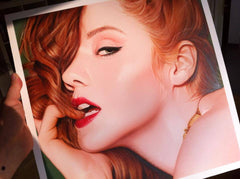
Imagine being able to create paintings like these with as much boldness and abstraction as you desire.
Enjoy success even if you are an absolute beginner
Everyone starts somewhere. With solid training, you can cut years (or more likely, decades) off of the time it takes to achieve your desired goals. Now it’s possible for you to gain control of your technique in a fraction of the time that it would take if you practiced on your own.


Color theory that solves all your color matching challenges
Learn all about Color Theory, Perceptual awareness, elements of vision, principles of Impressionism, recovery exercises, and how to begin a painting.. and that's on the first day!
Loosen up your brushwork
Learn to use bold colors to express yourself and discover how beautiful harmony is created using splatters, smears, and textures.
All you need to do is show up and be ready to learn.

What you will learn
01
Where to start: Layout and composition
This is the most important foundation of any painting, yet it is the most overlooked. Here you will learn how to position the bird to make use of negative space.
02
The differences between paint types
Each paint has unique characteristics which need to be considered. You will learn the differences, and when and why to use each.
03
Different tools for the job
We will introduce you to a variety of tools and materials, some combinations you will have never heard of before.
04
The elements of an impressionist painting
In order to create expressive works we must first be able to understand what to leave in and what to leave out of a painting. We will show you how to observe reality in a way that helps you avoid getting stuck in too many details
05
Ways to blend
There are many ways to effectively create beautiful transitions. We'll show you the options.
06
Color Theory
Our original theory was initially conceived in the eighties, and is now practiced in some form all over the world. This is a practical approach to color and color mixing that actually corresponds to the way paint behaves. It is simple, yet comprehensive in scope.
07
How to use the Color Wheel
The color wheel is a compass. We will show you how to choose the right color wheel and how to use it correctly. It can be your best aid when mixing and matching colors.
08
How to match color....perfectly
Color can be intimidating, but fear of color will be a thing of the past after we show you how to match a color dead-on every time. You will love this process, especially if you are tired of painting in shades of grey.
09
Understanding simultaneous contrast and the role it plays in your paintings
Simultaneous contrast is the illusion that colors that come in contact with each other seem more different than they actually are. We will show you how to harness this problem with color discrimination and turn it into one of your most powerful assets.
10
How to survive catastrophic errors
Soon or later, we all make painting mistakes. If you don’t know how to repair a mistake, your painting will be compromised. We will teach you several ways to repair a mistake, so you will always choose the correct one for your painting.
11
Transferring your image to the painting
There are 5 ways to maintain your proportions when transferring your photograph to the painting surface. Learn which ones are most effective.
12
Different types of edges and when to use them
The visual world contains a variety of edges. Some edges are soft, some are hard, and some are in between. You will learn many different useful techniques to create every type of edges.
13
Creating contrast
We will show you how to use contrast to effectively showcase the most important parts of your painting.
14
Adjusting the paint viscosity
Paint thickness matters, especially when creating effect. We'll show you what works best.
15
From zero to success in a few days
Almost all our courses are designed for absolute beginners, so don't worry if you've never painted in a bold expressive style before. We will show you what you need to know, and we don’t limit your training to just the paint brush. There are many tools that complement the brush, and we want you to be able to enjoy having the best of them in your arsenal.
16
subtractive techniques that will make a difference in your art
When properly used, subtractive methods, and add amazing effects to your work. We will show you different applications and how you can get the most out of them.
17
Using chemicals for special effects
You might be surpise what the right paint, combined with the right chemicals can accomplish. We will show you exactly how to make them work in your favor, and how to apply them on different surfaces.
18
How to use the airbrush for maximum impact.
If you want to extend your capabilities, then you will love how we use the airbrush to great effect.
19
The surface matters
There are countless substrates on which to apply paint, a your choices can enhance or deny your goals. We will show you how to choose.
20
Managing edges and transitions
The trickiest part of painting is controlling edges. Adjusting edges is necessary, but can be a bit tricky. We will teach you how to change the sharpness or softness of an edge after you’ve created it.
21
Masking techniques that work
A mask can be used in a variety of ways. You will learn which masks are best for any given situation.
22
How to create subtle feathers
Some feather types are more more subtle than others. We will show you several techniques to quickly achieve realistic feathers
23
Buffered Contrast Reduction, and how to use it
Contrast, along with proportions, and edges, can make or break a painting. Controlling contrast is simple using Buffered Contrast Reduction. We will explain what it is and how to use it.
24
How to find and fix problems in your paintings
Sometimes you can’t see the forest for the trees, and often mistakes go unnoticed. We will show you a simple technique that allows you to quickly spot problem areas that you would have otherwise overlooked.
25
How to develop observation techniques to expand your visual discrimination
Its difficult to paint anything accurately until you can really see it. We will teach you how to visually dismantle an object, then reassemble it on the painting surface.
26
Difficult transitions
Some complex transitions are a bit tricky to navigate. We will show you how to manage them.
27
Negotiating techniques that work
Negotiating a price for your work is probably the most stressful part of being an artist. We will show you negotiating methods that will help remove the stress when working with a client.
28
How to find quality reference photos
The saying goes "garbage in, garbage out." If you start with bad reference, it can sabotage your efforts. The trick is knowing how to find good images to work with.
29
Alternative ways to match colors
Its difficult to paint anything accurately until you can really see it. We will teach you how to visually dismantle an object, then reassemble it on the painting surface.
30
Selling your work
Learning about the business of art and marketing allows you, as an artist, to earn money for your creations. You will learn about pricing, galleries, copyright, prints, giclées, originals, and artist representatives.
What students are saying

I attended Dru's workshop with the hope of learning to paint, I left with the ability to "see" and a system that allowed me to develop my own understanding of painting and colours. Your system has given me the freedom to explore my own creativity.
Paul MacDonald
(Airvengers) Australia

Dru's teachings showed me how to create great detail and gave me the ability to achieve PHOTOREALISM in my artworks. Thank you for pioneering the world of photorealism in airbrushing, I doubt I would have got here without your long nights and many experiments .
David Naylor
Spain
Dru's workshop influenced the way I paint and gave me some new concepts, knowledge and skills to implement into the way I worked today I recommend it!
Mitch Lowther
(Airbrush tutor) Australia
About Blair Center for the Arts
Our school is located at 1125 Bowman Road, Mount Pleasant, SC, 29464 just a few minutes drive from downtown Charleston. We feature three studios with free parking on site.
Lodging
Our school in Charleston does not feature on-site lodging and meals. May we suggest the Tru by Hilton for the budget-minded, and the Hyatt House Charleston / Mount Pleasant. Both are less than 4 minutes drive from the school. If you prefer even closer accomodations, we recommend DoubleTree by Hilton Charleston Mount Pleasant
1330 Stuart Engals Blvd., Mt. Pleasant, South Carolina, 29464. It is only a 10-minute walk from the school.
Class Hours
Class begins at 9 am and ends at 5pm ( Eastern Standard Time). a 1-hour lunch break is held at 1 pm.
Meals
Charleston and Mount Pleasant are both known for their incredible restaurants. Since meals and lodging are not included in the tuition, students will have access to a variety of choices of restaurants in the area. Also the Doulbletree Hotel has a bar that serves good food. We will all dine together at least one night. Families invited!
Getting here
Charleston has a wonderful airport with easy access, and is about a 20 minute drive from the school and hotel. If you plan on doing some touring before or after class, we recommend UBER or taxi service, as parking can be bit tricky in the historic town. If you have questions about this class, the direct line to the school here is 843-936-6351.


Our
Guarantee
We are so sure that we offer the best airbrush course in the world that we are willing to offer you tuition money back if you don’t notice an immediate improvement in your art, and in the way you see the world after taking this course.

For Virtual Students
The in-person class is limited to 8 students, but if you cannot attend in person, there is also the virtual option.
Supplies
All materials are supplied for the in-person class. If you plan on taking the virtual class, you will need a simple airbrush setup and a color wheel set of Createx Illustration colors, a pallete knife, a squeegee brush, a can of Golden Matte Spray archival varnish, some assorted brushes, a mixing pallete, chromatic acrylic or oil paints, and a surface to paint on. I'll be painting on a smooth gesso panel. A more detailed supply list will be emailed to you as class approaches.
The reference, and any necessary stencils will be sent to you.